Evidence, Research and Development
'Emma has continued to strengthen her knowledge and has demonstrated autonomy in researching theory and models related to practice, furthermore she has exhibited an understanding of evidence-based knowledge to guide and inform care/treatment plans.'
Educator

OT models in practice
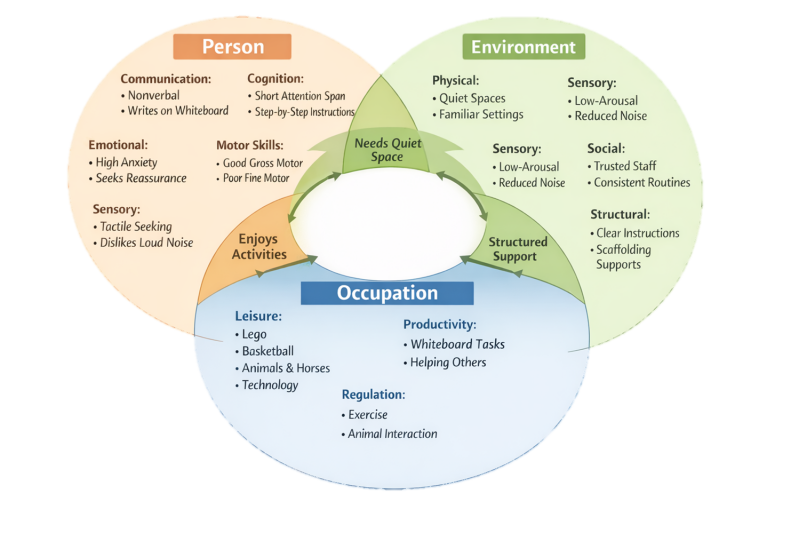
The application of occupational therapy models, such as MOHO and PEOP, is essential for demonstrating my ability to use research informed frameworks to guide evidence-based clinical reasoning and intervention planning. These models enable a holistic understanding of the individual by considering the interaction between person, environment, and occupation, ensuring interventions are person-centred and appropriate. Their use also promotes consistency in practice and encourages reflective thinking, supporting ongoing professional growth and the delivery of high-quality care.
Research of practice techniques
Understanding different practice techniques allows interventions to be selected and adapted appropriately to meet individual needs, improving both effectiveness and safety. Engaging with research also supports the development of clinical reasoning, enabling practitioners to justify their decisions and adapt interventions within different contexts. This is particularly important in varied practice settings, where no single approach fits all and highlights the importance of ongoing engagement with evidence as part of CPD.
Meso & Macro Level Intervention Ideas
Considering meso and macro level interventions is important for continuing professional development as it encourages practitioners to move beyond individual level thinking and engage with wider evidence relating to environments, services and policy. This supports the development of more advanced clinical reasoning and a broader understanding of how occupational performance is influenced by contextual factors.